
Fusion Now
Not in Thirty Years

As the Trump administration is driving forward a wave of long-sabotaged nuclear fission reactors in the USA, now comes breakthrough-initiatives that accelerates the drive to bring fusion energy on- line. Fusion produces several times more energy -- “the Holy Grail.”
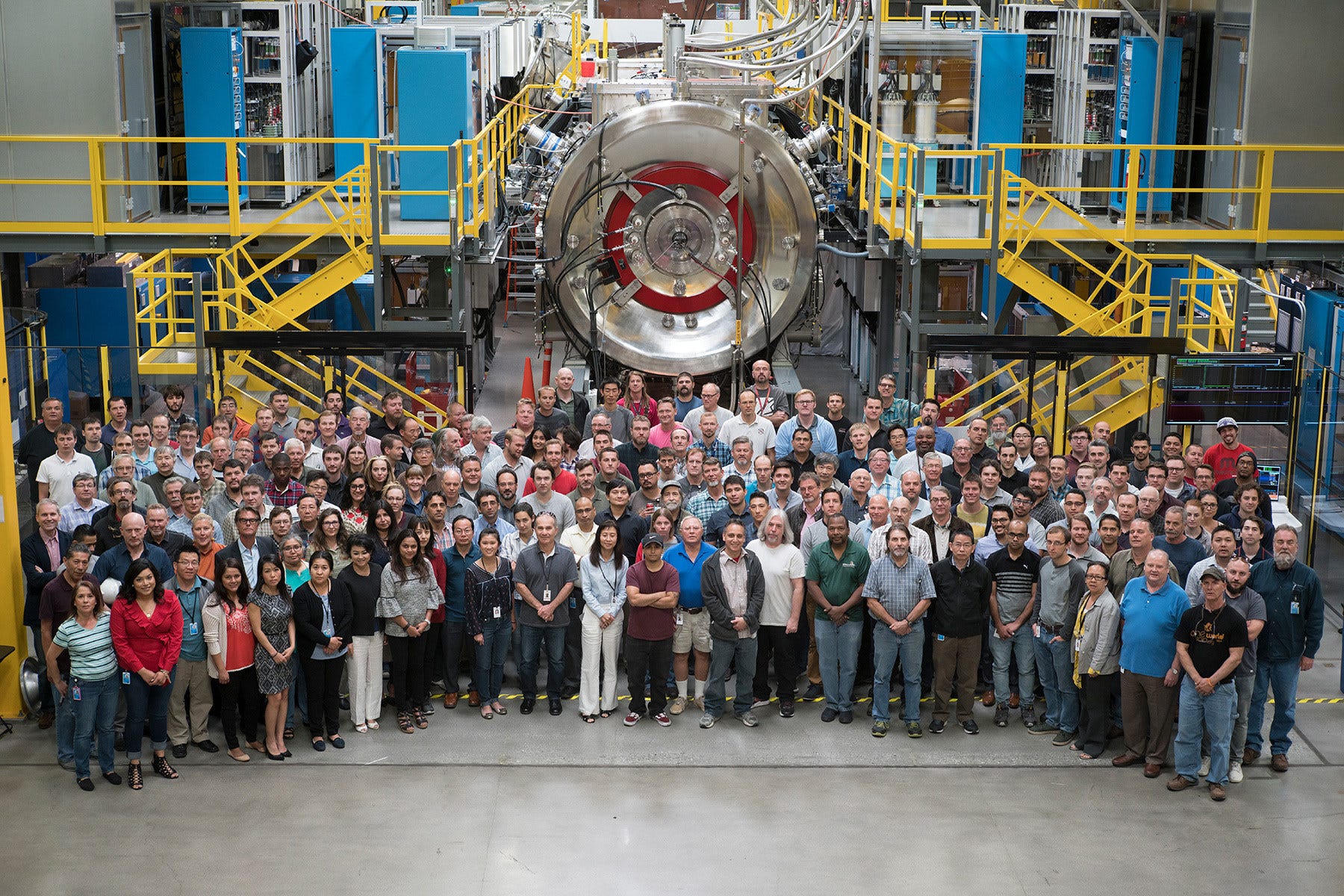
The now-unfolding, dramatic initiative is a combination of TAE Technologies’ major 2025 science and engineering breakthroughs with the follow-on, December 18th announcement of the merger of TAE with Trump Media & Technology Group Corp. (TMTG). This merger will create one of the very first publicly traded fusion companies, and provide the private capital to construct the first commercial fusion reactor, now planned to begin in 2026!
Delivering commercial fusion hinges on the ability to generate a plasma (the superheated, ionized fourth state of matter) at extraordinarily high temperatures and then confine that energy for extended periods of time to sustain the fusion of atoms and net energy gain. Stars like our sun are made of plasma. On earth today, tokamaks are the most common fusion reactor design, but are very complex.
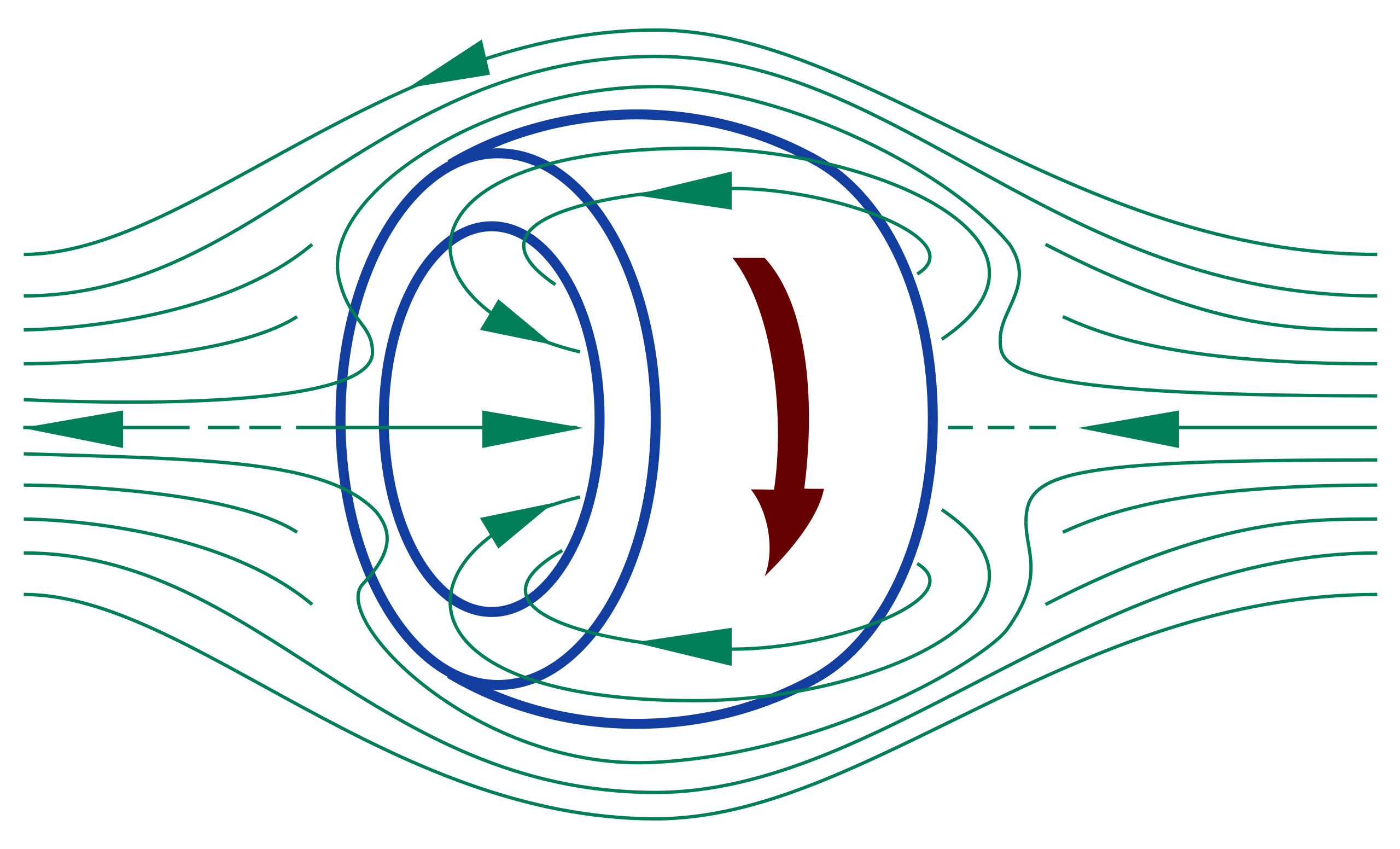
Another approach, long considered and worked on, is Field-Reversed Configuration (FRC), a magnetic confinement technique that now forms the basis of TAE’s fusion technology and unique results.
The Field-Reversed Configuration (FRC) plasma self-organizes and creates its own magnetic field inside a fusion reactor chamber, greatly reducing the external magnetic field strength required for confinement while making the device substantially more power efficient to operate. The key is still the achievement of the “triple product” of temperature, density, and confinement time.
TAE Technologies Breaks Through
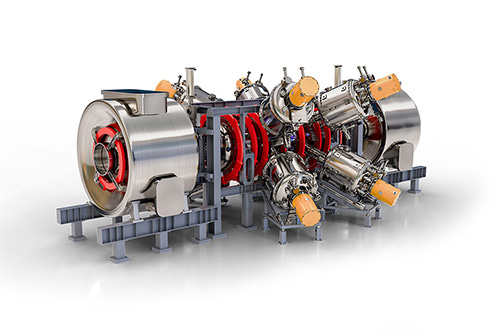
In April, TAE Technologies announced a major breakthrough with its latest fusion test reactor, “Norm.” TAE unveiled a machine re-configuration that leveraged its advanced particle accelerator technology with neutral particle beams to streamline traditional Field-Reversed Configuration (FRC) plasma formation.
As published in the peer-reviewed journal Nature Communications1, TAE’s new machine is able to use just neutral beam injection (NBI) to produce a hot, stable FRC plasma – reducing the machine’s size, complexity and cost by up to 50% and opening the door to commercial viability. The reconfiguration has significantly markedly improving plasma stability while reducing both system complexity and cost.2
By November, after continued experimentation with Norm, TAE and its co-founder and CEO Michl Binderbauer released a prepared statement at the annual meeting of the American Physical Society’s Division of Plasma Physics. TAE announced that it was “leap frogging” its own timeline and is prepared to build a commercial fusion power plant.3
“The demonstration of NBI-only FRC formation resolves a central challenge for beam-driven fusion: how to generate and maintain self-organizing, closed-field plasmas without complicated start-up systems,” reported Toshiki Tajima, TAE’s Chief Science Officer. It was also reported that Norm was being further upgraded to achieve plasma temperatures of 100 million degrees Centigrade -- at least six times the temperature of the Sun’s core.4
As demonstrated in TAE’s latest and streamlined Norm fusion research reactor, energetic neutral beams are injected into a magnetically confined initial “seed plasma,” where the trapped, energetic beam ions create a strong toroidal current. Within approximately 10 milliseconds, this toroidal plasma current builds naturally into a fully formed Field-Reversed Configuration (FRC) right in the center of the device!
Historically these vortex formations, although created, would disintegrate -- in fractions of a millisecond -- rather than becoming a self-organizing and self-compressing “smoke ring” of plasma. Decades of scientific and engineering work, including innovations in neutral beams, power supplies and real-time active feedback control, made TAE’s breakthrough possible -- and repeatable.
Bringing Fusion On-Line Now
It was then on December 18th, that publicly-listed Trump Media & Technology Group Corp. (TMTG) and TAE Technologies, Inc. (TAE) announced the signing of a definitive merger agreement. Devin Nunes, TMTG Chairman and CEO, and Dr. Michl Binderbauer, TAE CEO and Director, will serve as Co-CEOs of the combined company; Michael B. Schwab, Founder and Managing Director of Big Sky Partners, is expected to be named Chairman of a planned nine-member board of directors. This is in an all-stock transaction valued at more than $6 billion.
After more than 25 years of research and development, TAE has significantly reduced fusion reactor size, cost and complexity, in the process of operating and scaling five fusion reactors. It is also noteworthy that, to carry out this work, TAE has raised more than $1.3 billion in private capital to date from Google, Chevron Technology Ventures, Goldman Sachs, Sumitomo Corporation of Americas, and family offices including Addison Fischer and Charles R. Schwab.
The Consequential Thinking of Trump Media’s Devin Nunes
Trump Media & Technology Group (TMTG) CEO Devin Nunes publicly details that the $6 billion merger with TAE Technologies accesses the capital required to begin building TAE’s first 50 MW commercial reactor in 2026, and then scale to 350-500 megawatt reactors. They are now looking for the state, and the desired site, to build.
As CEO of TMTG, Devin Nunes -- former congressman and current Chair of the President’s Foreign Intelligence Advisory Board -- is stating in interviews that fusion is, “THE Holy Grail, its like the Sun.” It has been pursued for 75 years, and to produce enough energy, and bring energy prices down, “we have to get fusion energy to work.” In his mind, there is nothing bigger, nothing more important, than fixing the energy crisis. Nunes explains why the U.S. faces a true electricity crisis—especially in “blue” states that poured investment into wind and solar, and electricity prices have gone up. The TMTG-TAE merger if successful, “will be the largest, biggest deal, most important deal that’s happened in the last 100 years since the first Manhattan Project.”
Nunes is praising TAE Technologies for developing its technology through 25 years of private funding rather than government subsidies. TAE has done the science and built five models in the process. TAE/fusion is the “crown jewel asset,” Nunes says, and is now ready to build the first utility scale fusion reactor. TAE’s work has all been done with private funding, but now they now need public markets, and TMTG provides that access.
There is also a national defense aspect, Nunes said. TAE Technology can allow us “to win this war, and it really is a war.” TAE technology does not require rare-earth magnets, and we need to be energy independent. While we fell behind due to focusing on windmills, China went with nuclear and coal plants, and has now doubled its investments in fusion.
Nunes also mentions that President Trump is personally concerned about nuclear proliferation and clean energy and has a personal interest in the technology due to an uncle (John George Trump, noted MIT physicist and engineer) who was involved in nuclear research.5
The DOE’s Fusion Science & Technology Roadmap
The Trump Administration and the Department of Energy (DOE) has already been focused on fusion energy and the best way forward. Secretary of DOE Chris Wright and the DOE, working with scientists and engineers in the private sector and DOE’s national laboratories, released the Fusion Science & Technology Roadmap in October, 2025, highlighting a collaborative “Engine” ecosystem.6
The DOE’s Fusion Science & Technology (FS&T) Roadmap (hereafter “the Roadmap”) aims to usher a now-burgeoning US fusion private sector industry toward maturity on a rapid timeline.
The Roadmap states that it is primarily based on two key reports developed under President Trump’s first administration. The first is the 2020 Fusion Energy Sciences Advisory Committee (FESAC) Long Range Program. The second is the February, 2021 National Academies of Sciences, Engineering and Medicine (NASEM) report, Bringing Fusion to the U.S. Grid, a broad-based consensus report produced with scientists, engineers and private sector corporate leaders, based on a request from the Department of Energy (DOE).7
Both of these reports make the assumption that the most direct approach to achieving fusion power is utilization of Deuterium-Tritium fuel. This is in part because the temperature at which Deuterium-Tritium (D-T) fusion reactions can be achieved is at a significantly lower temperature and pressure. Where the 2021 NASEM report proposed federal sponsorship of three parallel, competing projects to bring D-T fusion to the grid, the 2025 DOE Roadmap rightfully spotlights the growth in private sector investment into fusion, and so directs federal investment to address Fusion Materials and Technology (FM&T) “gaps,” in support of burgeoning private sector financing of US fusion energy start-ups:
“While the U.S. private sector is investing > $9B to demonstrate sustaining burning plasma on the path to fusion power plants, there remain critical science, materials and technology gaps, such as breeding and handling of fusion fuels, that must be closed to deliver fusion power to the grid. These critical gaps that remain require innovation and bridging of public and private sectors.”
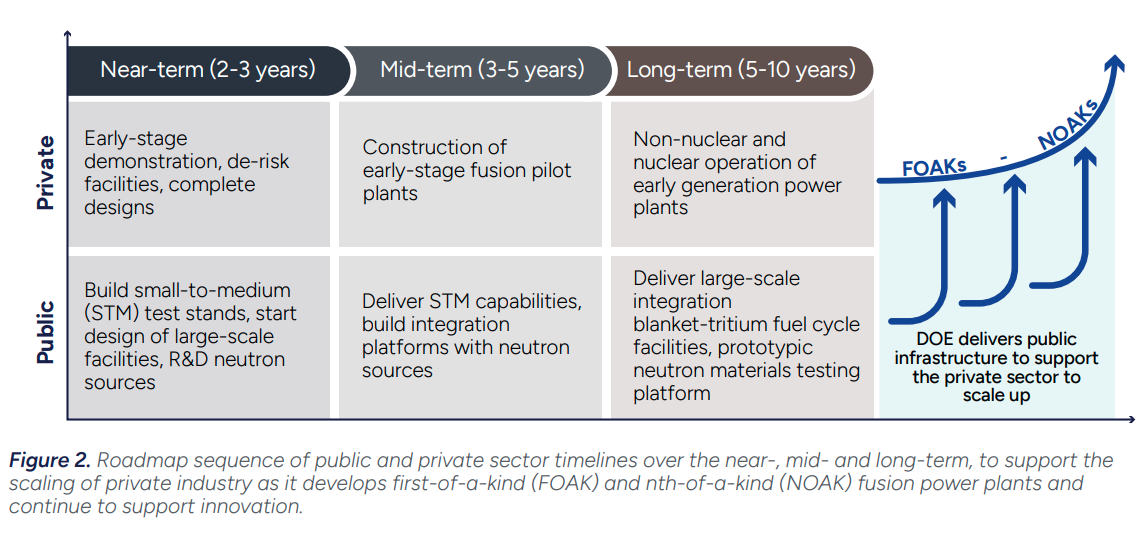
The DOE Roadmap report therefore lays out a ten year perspective, with the public sector supporting the eventual scaling up of private sector fusion power plants, as the report visualizes in this graph:
Neutron Degradation of Materials
The Roadmap presents a broad-brushstroke plan, in 52 pages, that would, “enable closure of critical S&T gaps along six core Challenge Areas. These areas include Structural Materials, Plasma-Facing Components (PFCs), Advancing Confinement Approaches, Fuel Cycle and Tritium Processing, Blankets and Fusion Plant Engineering & System Integration.” The report also presents a summary of key milestones across all six challenge areas, on pages 41 and 42.
The included Fusion Science & Technology (FS&T) Infrastructure Map therein addresses “Core Challenge Areas” along a Roadmap timeline. This is infrastructure summarized as, “a platform of tools such as large-scale facilities, small-to-mid scale capabilities and test stands, threaded by a National AI-Fusion Convergence Platform initiative,” that will utilize high-performance computing, digital and computational model systems. Emphasis is given to the,“exceptional materials degradation caused by the large quantities of fusion neutrons...one of the single largest factors limiting the economics and safety of fusion energy.” This neutron degradation problem is inherent in Deuterium-Tritium fusion reactions.
The report stresses the need for a Fusion Prototypical Neutron Source (FNPS) facility as, “the highest priority facility to help develop and engineer materials needed by the fusion industry under fusion-relevant testing environments.” Yet access to such a facility is admitted to be a long-term goal, identified as 5 to 10 years out!
Out-Flanking the Problem
Here is a critical area where TAE Technologies, and its scientists and engineers, have flanked almost everyone else!
The core principle of TAE Technologies’ approach is that of aneutronic fusion. Aneutronic fusion, by definition, uses nuclei of heavier elements, such as boron, helium, or lithium. This type of fusion reaction releases the majority of its energy in the form of fast-moving, positively charged particles, as opposed to ‘nasty’ neutrons, which carry no charge. This small but important difference in approach now appears to makes the harnessing of fusion energy both more efficient and safer. With TAE’s hydrogen-boron fuel there is little or no neutron degradation.
Using hydrogen-boron (p-B11) fuel allows for simpler reactor designs with less need for heavy shielding and complex cooling systems. This “cleaner” fuel cycle produces charged alpha particles (helium) and energetic light rather than damaging neutrons, making the reactor walls last much longer, as well as simplifying energy capture.
There is also another important advantage. As with is Deuterium-Helium powered fusion pursued by Helion Energy, aneutronic fusion reactors will ultimately not require a steam cycle.8
Their emission of charged particles, as opposed to neutrons, means that aneutronic fusion reactors can potentially be more efficient than proposed deuterium-tritium (D-T) fueled fusion reactors. These reactors can capture energy through direct electric conversion by making use of induction and other changes in the electromagnetic fields, skipping the steam turbine cycle.
D-T fusion power plants, by comparison, would need to utilize the common Rankine steam cycle of converting heat to mechanical work. During the steam cycle water is heated and evaporated using the kinetic energy generated by the fusion reaction (neutrons). The steam turns a turbine to generate electrical energy, as in today conventional power plants. While simple, this method of collecting energy is inefficient with 50% or more of the initial energy being lost.
“There was a lot of work in what we then called ‘advanced fuels’ from the 1960s through the 1980s,” said Gerald Kulcinski, a nuclear engineer and professor emeritus at the University of Wisconsin. The work fell out of favor, he says, “because it’s about 10 times harder to produce that reaction than it is the D-T reaction. But in the last decade or so, people have started to think more and more about advanced fuels, because of how much damage neutrons can do to [a reactor’s] first walls.”9
That comment from Gerald Kulcinski was from two years ago. Fusion, with “advanced fuels” such as hydrogen-boron, is now here!
https://www.nature.com/articles/s41467-025-58849-5
https://tae.com/tae-technologies-delivers-fusion-breakthrough-that-dramatically-reduces-cost-of-a-future-power-plant/
https://tae.com/tae-shortens-device-roadmap-prepares-for-commercial-era/
https://higherlogicdownload.s3.amazonaws.com/APS/b702bb59-ce08-4ebc-b70c-ab50811fa080/UploadedImages/2025_APS_Roche_editsv2.pdf
For recent Nunes interviews see: FOX Business Bartolommeo interview: https://www.foxbusiness.com/video/6386647097112 ; a Fox Sunday Morning Futures interview with Bartolommeo, with a John Deere tractor behind him:
and Just The News: https://justthenews.com/videos/tmtg-ceo-devin-nunes-talks-about-merger-energy-company-tae
https://www.energy.gov/sites/default/files/2025-10/fusion-s%26t-roadmap-101625.pdf
https://www.nationalacademies.org/publications/25991
Another example of aneutronic fusion is Deuterium-Helium3 fusion, which releases up twice the energy per reaction (up to 18.3 MeV). Helion Energy is working on Deuterium-Helium3 (D-HE-3) fusion, a aneutronic fuel cycle that also produces primarily charged particles, not neutrons. Eventually it too can be utilized for direct electricity conversion, offering higher efficiencies and far fewer problematic neutrons compared to Deuterium-Tritium (D-T) approaches -- though Helium3 is scarce on Earth. It is famously plentiful on the Moon. In another approach, Princeton Fusion Systems (PFS) is utilizing D-T, but are pioneering techniques like spin polarization and adjusting fuel ratios to dramatically reduce the needed tritium.
https://spectrum.ieee.org/aneutronic-fusion
Thanks for restacking my latest post, Fusion Now. It’s important that your neighbor grasp the importance of fusion energy and the breakthroughs now underway! I am certainly encouraged by the response. Thanks